 Arcade Nebula
Arcade Nebula
Arcade Nebula

Color Match Puzzle offers a satisfying blend of logic and physics. The limited clicks per level force strategic thinking, while the falling shapes add a dynamic twist. It's a great choice for casual players who enjoy thoughtful puzzles without stress.
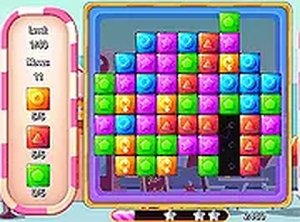
Color Match Puzzle is a casual puzzle game that challenges your ability to think ahead. The objective is to clear a board filled with colorful shapes using a limited number of clicks. When shapes of the same color touch each other, they form a group, and a single click removes the entire group. Physics effects cause remaining shapes to shift or fall after each removal, creating new groups and adding a strategic layer. The game offers a relaxing, no-time-limit experience suitable for all ages, helping improve pattern recognition and planning skills.
To play, start by studying the board to identify groups of touching shapes that share the same color. Click on any shape in a group to remove all connected shapes of that color. Each click counts toward your limit for the level. If you clear the board before using all allowed clicks, you win. If you run out of clicks, you must restart the level. As you progress, puzzles become more complex, requiring you to plan the order of removals to create larger groups and use physics to your advantage.
Features include multiple levels with progressively challenging arrangements, physics-based interactions that change the board after each move, and a limited number of clicks per level that encourages strategic thinking. The game has colorful, family-friendly visuals, no time pressure, and simple one-click controls. It is suitable for both children and adults, and helps develop logic and observation skills.
Take your time to analyze the entire board before making your first click. Look for groups that, when removed, will cause shapes above to fall and form new, larger groups. Prioritize removing isolated groups that may block larger combinations. Plan your moves several steps ahead, and try to use as few clicks as possible to maximize your remaining clicks for later stages. Practice regularly to improve your pattern recognition and strategic planning.




Player Comments
Sign in to comment
You must be logged in before posting a review or rating.
No account? Create one
No comments yet. Be the first to comment!