 Arcade Nebula
Arcade Nebula
Arcade Nebula
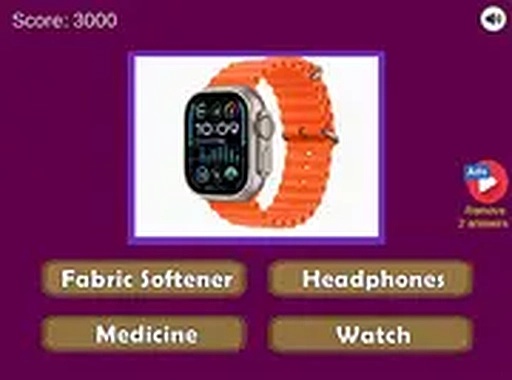
This quiz stands out for its simplicity and educational value. The clues are well-written, requiring careful thought without being frustrating. The variety of categories keeps each session fresh, and the lack of time pressure makes it accessible for all ages. It's an excellent choice for casual players who enjoy testing their knowledge of the world around them.
This trivia experience focuses on recognizing objects people interact with daily. Players receive a short textual hint describing an item's typical use, appearance, or location. The challenge lies in connecting the clue to the correct object from a set of options. Categories span personal care products, cleaning supplies, and kitchen utensils, drawing on real-world knowledge rather than abstract concepts.
Each round presents a single clue followed by four possible answers. After selecting an option, immediate feedback shows whether the choice was correct. The game then moves to the next item, gradually introducing a broader range of objects. There is no time pressure, allowing players to consider each clue carefully. This structure makes the game suitable for quick mental breaks or longer practice sessions.
The interface is designed for simplicity, working smoothly on desktop computers, tablets, and smartphones. All interactions use tap or click actions, and the layout adjusts automatically to different screen sizes. Since the game runs entirely in a web browser, there is no need to install software or create an account. This lowers the barrier for new players and makes it easy to start playing immediately.
Beyond entertainment, the quiz serves as a tool for vocabulary building and memory reinforcement. Players encounter terms for items they may use regularly but rarely name explicitly. For language learners, this context-based approach helps associate words with real objects. The variety of categories ensures repeated exposure to different types of everyday items, supporting long-term retention.
Success depends on careful reading and logical deduction. When uncertain, players can eliminate obviously incorrect answers before making a final choice. The absence of penalties for wrong guesses encourages experimentation. Over multiple rounds, pattern recognition improves, and response times often decrease. Regular play helps build a mental catalog of item descriptions and their corresponding names.









Player Comments
Sign in to comment
You must be logged in before posting a review or rating.
No account? Create one
No comments yet. Be the first to comment!