 Arcade Nebula
Arcade Nebula
Arcade Nebula
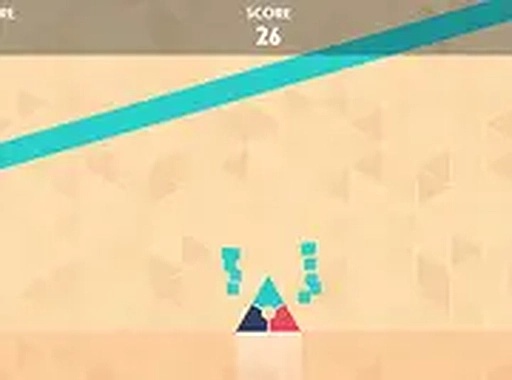
Hue Rotation Reflex Challenge delivers a focused and rewarding experience built around a simple concept. The core mechanic of rotating a triangle to match falling colors is immediately intuitive, yet the gradual increase in speed provides a meaningful challenge. The visual clarity is a standout feature, with distinct colors and a clean background that supports quick decision-making. Controls are responsive and work well on both touchscreens and desktop browsers. While the game lacks variety in modes or power-ups, its straightforward design makes it an excellent choice for short, satisfying play sessions. It is a well-executed example of a reflex-based puzzle game.
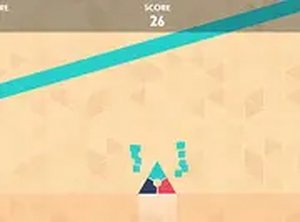
The central activity in Hue Rotation Reflex Challenge involves a triangle at the bottom of the screen and a series of colored lines descending from above. Each line carries a specific color, and the player must rotate the triangle so its displayed hue matches that of the approaching line. Rotation occurs in two directions: a tap on the right side turns the triangle clockwise, while a tap on the left side turns it counterclockwise. Success depends on recognizing the target color quickly and executing the correct rotation before the line reaches the bottom. This straightforward mechanic creates a loop that is easy to understand but requires increasing speed and accuracy.
The game begins at a comfortable pace, allowing new players to get accustomed to the controls and color recognition demands. As the player accumulates successful matches, the falling speed of the lines gradually increases. This acceleration means that later rounds leave less time for deliberation, forcing players to rely on instinct and rapid visual processing. The difficulty ramp is designed to feel natural, giving players enough time to build confidence before the challenge intensifies. This structure ensures that the game remains engaging for both casual players and those seeking a more demanding experience.
The visual presentation prioritizes clarity to support the fast-paced gameplay. Colors used for the lines and the triangle are distinct and saturated, making them easy to differentiate even as speed increases. The background remains simple and unobtrusive, ensuring that the player's attention stays on the falling lines and the rotating triangle. This clean aesthetic reduces visual noise, which is critical for a game where split-second decisions matter. The overall look is bright and family-friendly, appealing to a wide audience without relying on complex graphics or themes.
Hue Rotation Reflex Challenge uses a control scheme that is intentionally minimal. The entire interaction consists of tapping the left or right side of the screen to rotate the triangle. This design makes the game accessible on any device with a browser, including mobile phones, tablets, and desktop computers. No complex gestures, button combinations, or external accessories are required. The simplicity of the controls allows players to focus entirely on the color-matching task, lowering the barrier to entry for new players while still providing a satisfying challenge for experienced ones.
Each play session consists of a continuous series of color-matching attempts, with the game ending when a line reaches the bottom without a correct match. The lack of levels or checkpoints means that every session is a fresh attempt to achieve a higher score or longer survival time. This structure encourages repeated play, as players can always try to improve their personal best. The increasing speed ensures that no two sessions feel exactly the same, as the timing and color sequences vary. This design supports short, focused play sessions that fit easily into a busy schedule.





Player Comments
Sign in to comment
You must be logged in before posting a review or rating.
No account? Create one
No comments yet. Be the first to comment!